Home Freezing strategies When blast freezing foodstuff there are basically...
Read MoreFreezing of foodstuff are often important as well as a critical proces in the value chain of food processing companies. Freezing is often a major cost driver although its proces highly influence the product quality of the frozen product.
Even though the food industry generally is highly effective the processes of freezing often get low attention. Often we meet situations or questions from end-users which indicate a lack of focus on this important process.
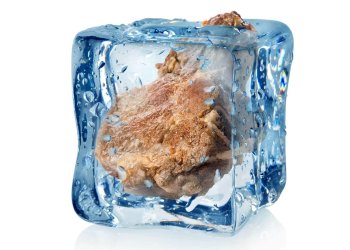
Meat contains up to 75% water which in the process of freezing is converted into ice-crystalline. The longer the freezing process takes the larger are the ice crystals formed. As large ice-crystals tend to ”merge” this can disrupt the structure of the meat-cells. Amongst others, this impairs the meat’s ability to hold or ”bind” water.
Fluctuating temperatures during the freezing process can also lead to the merger of ice-crystal. A fast and effective controlled freezing therefore not only influences the energy consumption in the freezing-process but also the defrosting process and the ”drip-loss” related hereto.
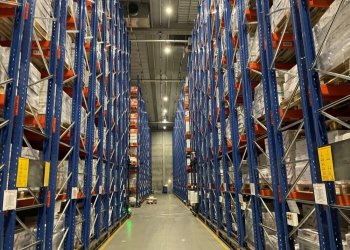
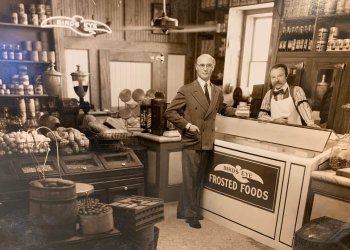
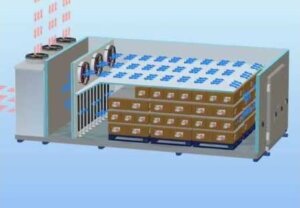
One of the dominating freezing techniques within industrial food processing is still blast– or shock-freezing. Here the products are placed in a blast freezing chamber where a number of fans and cooling devices expose the products to airflow with temperatures down to -40º. A technique which first was developed by the American inventor Clarence Birdseye in the early twenties.


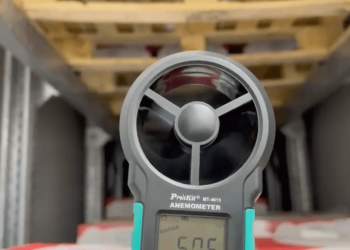
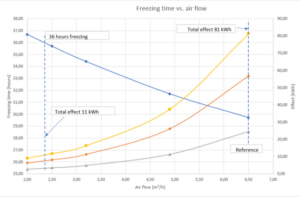
The time it takes to freeze a product to a given temperature depends on several factors such as the initial temperature, the product density, the packaging, the placement of the pallets, the air temperature and speed, the freezer chamber arrangement, including not least how easily the air in the cooling room can circulate.
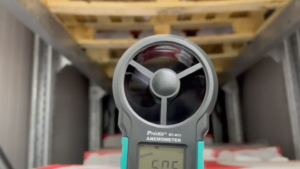
The airflow is one of the factors that can be relatively easily adjusted to achieve better utilization and thus efficiency in the freezer compartment.
During the years we have had several clients claiming that the investment in highly effective freezer spacers had reached break-even within months.
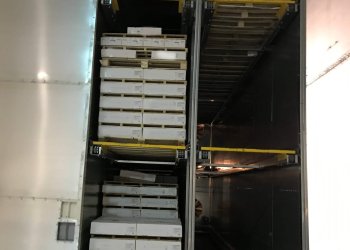
As airflow will always choose the path with least resistance the cooled air must be ”forced” not only in-between the stacked layers of products but also in-between the pallets. Hence the location of the pallets in the blast freezing chamber and the use of open-profile freezer spacers™ in-between the stacked box-layers is of utmost importance for the total freezing efficiency.
The use of open profile freezer spacers allowing a high airflow is therefore one of the most profitable investments you can do in order to reduce energy costs, increase efficiency and improve product quality.
Freezer spacers are offered in a variety of designs and materials. The more open profiled a spacer is the more airflow is allowed through the spacer and as such the shorter the freezing time.
In short, a reduced freezing time leads to:
During the years we have had several clients claiming that the investment in highly effective freezer spacers had reached break-even within months.
Home Freezing strategies When blast freezing foodstuff there are basically...
Read MoreHome Efficient blast freezing with freezer spacers Freezer spacers are...
Read MoreHome Blast Freezing Q&A Published as “Blast Freezing Tips” in...
Read MoreThank you for your interest in our temperature sensors.
Please fill out the form below and we’ll get back to you shortly.